For decades, the definition of a “sports fan” was simple. It was someone who bought a ticket, sat on a bleacher, or parked themselves on the sofa to watch a 90-minute match on a linear TV channel. Today, that definition feels almost antique.
We have entered the era of Online Sports—a vast, buzzing digital arena where the action never stops, the players are sometimes pixels, and the fans sit thousands of miles apart but feel closer than ever.
But what exactly are “online sports”? The term has split into two powerful currents: the digitization of traditional athletics and the meteoric rise of esports. Together, they are creating a new global pastime.
The Great Digital Pivot: Streaming & Fantasy
The most obvious shift is how we consume traditional sports. The cable subscription is dying. In its place, streaming platforms (DAZN, ESPN+, Amazon Prime) and direct-to-consumer league passes (NBA League Pass, NFL Game Pass) have taken over.
However, the real revolution isn’t just watching the game; it’s interacting with it.
Fantasy Sports have turned passive viewers into active managers. Millions of fans no longer just root for the Yankees or the Lakers; they obsess over the defensive tackle rate of a backup linebacker because he is on their fantasy roster. This shift has turned every statistical play into a dopamine hit, keeping users glued to live scoreboards and analytics apps long after the final whistle.
The New Colossus: Esports
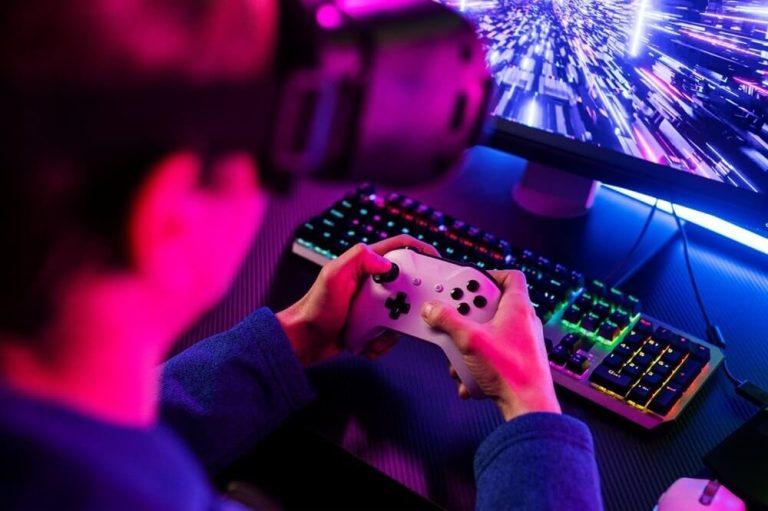
Then there is the elephant in the stadium—Esports. Once dismissed as “nerds playing video games,” competitive gaming is now a billion-dollar industry. Games like League of Legends, Valorant, and Counter-Strike fill actual stadiums (sold out in minutes) and draw virtual audiences that rival the Super Bowl.
Consider this: The 2023 League of Legends World Championship peaked at over 6 million concurrent viewers. That is not a niche hobby; that is a mainstream sports property.
Esports has succeeded where traditional sports have struggled: it speaks the language of Gen Z. It is native to platforms like Twitch and YouTube, where the barrier between player and fan vanishes. You don’t just watch Faker (a famous League of Legends pro); you subscribe to his channel, chat with him via emotes, and watch him practice live.
The Hybrid Athlete
One of the most fascinating trends is the blurring of the lines. Real-world athletes are diving headfirst into the digital space.
During the COVID-19 lockdowns, when physical stadiums went silent, we saw F1 drivers competing in virtual Grands Prix and NBA stars playing NBA 2K against fans. Today, this hybrid model is permanent. Soccer clubs like Manchester City and PSG have official esports teams that compete under the same brand as their grass-stained counterparts.
Furthermore, “sim racing” has become a legitimate career path. Athletes who might lack the physique for F1 can now compete at the highest level using hyper-realistic simulators, proving that the reflexes of a driver are just as valid behind a screen as behind a wheel.
The Dark Side of the Server
Of course, the digital arena is not all victory laps and trophies. The shift online brings significant challenges:
-
Toxicity: The anonymity of the internet breeds abuse. Online sports communities, particularly in competitive gaming, are infamous for harassment, sexism, and “trash talk” that escalates into real-world harm.
-
The Digital Divide: Not everyone has fiber-optic internet or a $2,000 gaming PC. As sports move online, we risk alienating fans and players from lower socio-economic backgrounds.
-
Burnout: The “always on” nature of online sports (daily fantasy, 24/7 streaming, constant practice) removes the natural off-season. Athletes and fans are suffering from digital fatigue.
The Final Score
So, what is the future of online sports? It is not a replacement for the physical world, but a parallel universe.
We will never replace the roar of a live crowd or the smell of the grass. However, online sports offer something the physical world cannot: accessibility.
A kid in rural Indonesia can learn Jiu-Jitsu from a YouTube tutorial. A disabled veteran can find community in a Rocket League tournament. A retiree can beat their grandchild in online chess from a thousand miles away.
Online sports have torn down the walls of the stadium. The game is no longer “over there”—it is right here, on our phones, our laptops, and our consoles. The only question left is: Are you ready to play?