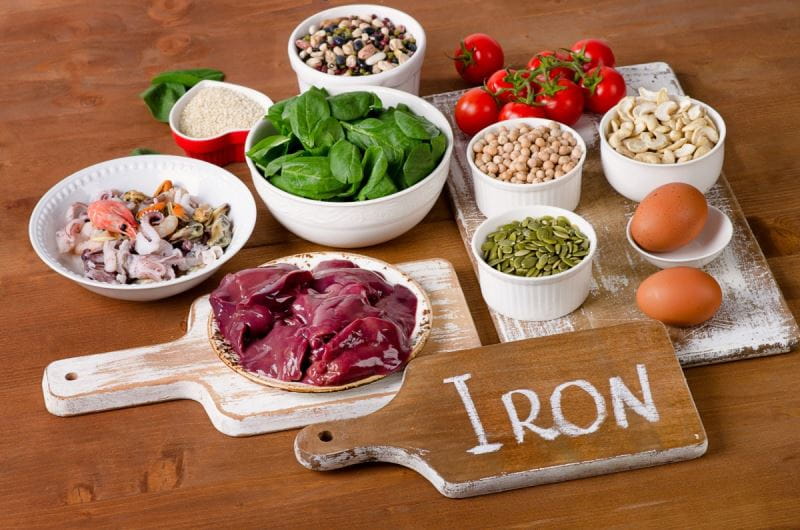
Iron is an essential mineral your body needs to produce hemoglobin and support energy levels. Here’s a breakdown of the best dietary sources:
Animal-Based Sources (Heme Iron — most easily absorbed)
Organ Meats top the list by a wide margin:
- Beef liver — ~6.5 mg per 85g serving (36% DV)
- Chicken liver — ~11 mg per 85g serving (61% DV)
- Oysters — ~8 mg per 85g serving (44% DV)
- Clams — ~3 mg per clam (23% DV per 85g)
Meat & Seafood:
- Beef (ground) — ~2.2 mg per 85g
- Sardines — ~2.5 mg per 85g
- Tuna — ~1.4 mg per 85g
- Shrimp — ~1.4 mg per 85g
Plant-Based Sources (Non-Heme Iron — less absorbed, but still valuable)
Legumes:
- Lentils — ~6.6 mg per cooked cup (37% DV) ⭐
- Soybeans / Edamame — ~8.8 mg per cooked cup
- Kidney beans — ~5.2 mg per cooked cup
- Chickpeas — ~4.7 mg per cooked cup
Seeds & Nuts:
- Pumpkin seeds — ~2.5 mg per 28g (14% DV)
- Hemp seeds — ~2.4 mg per 30g
- Cashews — ~1.9 mg per 28g
Vegetables & Grains:
- Tofu — ~3.4 mg per 126g serving
- Spinach (cooked) — ~6.4 mg per cooked cup
- Dark chocolate (70–85%) — ~3.4 mg per 28g
- Quinoa — ~2.8 mg per cooked cup
- Fortified cereals — up to 18 mg per serving (100% DV in some brands)
Tips to Maximize Iron Absorption
- Pair with Vitamin C — citrus, bell peppers, or tomatoes significantly boost non-heme iron absorption
- Avoid coffee/tea with iron-rich meals — tannins inhibit absorption
- Cook in a cast-iron pan — can add small amounts of iron to food
- Separate from calcium — dairy and calcium supplements compete with iron absorption
Daily Requirements (RDA)
| Group | RDA |
|---|---|
| Adult men | 8 mg/day |
| Women (19–50) | 18 mg/day |
| Pregnant women | 27 mg/day |
| Children (1–8) | 7–10 mg/day |
The higher requirement for women of childbearing age reflects menstrual losses. If you’re concerned about deficiency or anemia, a blood test and consultation with a doctor is the best next step.